The history of tarot and playing cards has been overshadowed by two persistent myths for centuries.
First myth: tarot came from ancient Egypt. It began in 1781, when Antoine Court de Gébelin published the claim in volume eight of Le Monde primitif, a sweeping multi-volume study of ancient civilizations. He cited no source and offered no evidence, yet it became the foundation of occult tarot mythology for over two hundred years.
Second myth, built on the first: the Knights Templar encountered tarot in Egypt during the Crusades and brought it back to Europe. In reality, the Templar Order was dissolved in 1312 - 129 years before tarot was invented. In fact, if Templars encountered any cards in Egypt, it would have been the 52-card Egyptian playing deck, not its later Italian descendant, the tarot.
The timeline below brings to light the actual history, entry by entry…
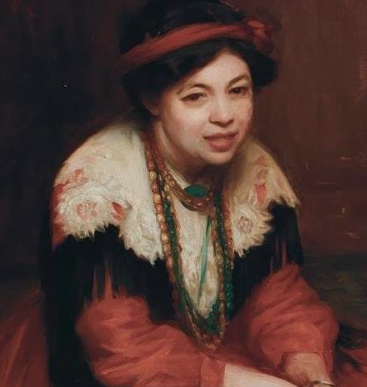
Pamela Coleman Smith, the illustrator of the Rider-Waite Tarot, also referred to as the Smith-Waite Tarot. Collection of S.R. Kaplan. Further reproduction prohibited.
*– Timeline research compiled across two generations: CJ Freeman (publ. 2002) and Ana Cortez (publ. 2026)
1100s-1430: First Card Decks Appear in History
This is where known playing card history begins. The 52-card deck leaves its trace in Mamluk Egypt in the 1100s-1200s. The structure you find in decks today – 52 cards, 4 suits, 13 ranks – was intact and preserved through the Islamic culture. Tarot would not exist for another 250+ years.
- 1100s-1200s: Oldest surviving fragments of cards – from the “Mamluk” deck of 52 from Egypt. The structure is fully visible in the famous near-complete Mamluk deck preserved at Topkapı Palace Museum (c. 1500): 52 cards, four suits of 13, courts + pips – mirroring our playing decks today.
Note: These are the oldest surviving examples, not necessarily the origins. We know the Mamluk Egyptians had the 52-card deck, but did they invent it, or did they inherit it? From an even earlier culture, an even earlier time? We truly don’t know just how old playing cards are – and that’s one of its most compelling mysteries.
- 1312: Knights Templar officially dissolved by Pope Clement V. Despite persistent occult mythology claiming Templars brought tarot back from Egypt during the Crusades, they were disbanded 129 years before tarot was invented (1441). In fact, if Templars encountered any card system in Mamluk territories, it would have been the 52-card playing deck - the actual Egyptian calendar system that tarot would later modify
- 1371: First European reference to playing cards appears in a Catalan rhyming dictionary – followed by a rapid spread and flood of references (often bans) across Italy, Spain, Germany, France, and beyond throughout the late 1370s.
- 1377: German monk Johannes of Rheinfelden (also referred to as “Johannes of Basel”) first references 2 female Courts (52-card deck with Queen and her Female Attendant or “Lady Card”)
- c. 1400-1420: Earliest surviving European playing card fragments - including a Knave of Coins from a Catalan deck (Fournier Museum, Spain) and an uncut sheet with Mamluk-inspired designs (Instituto Municipal de Historia in Barcelona, Spain). These show the 52-card structure with Latin suits (coins, cups, swords, clubs) already circulating in Spain before tarot’s invention.
- c. 1430: Stuttgart Playing Cards - earliest near-complete European deck preserved. 49 of 52 cards survive (Landesmuseum Württemberg, Germany), featuring luxury hand-painted hunting suits: falcons, hounds, stags, and ducks. Watermark dating (1427-1431) confirms widespread European adoption of the 52-card structure.
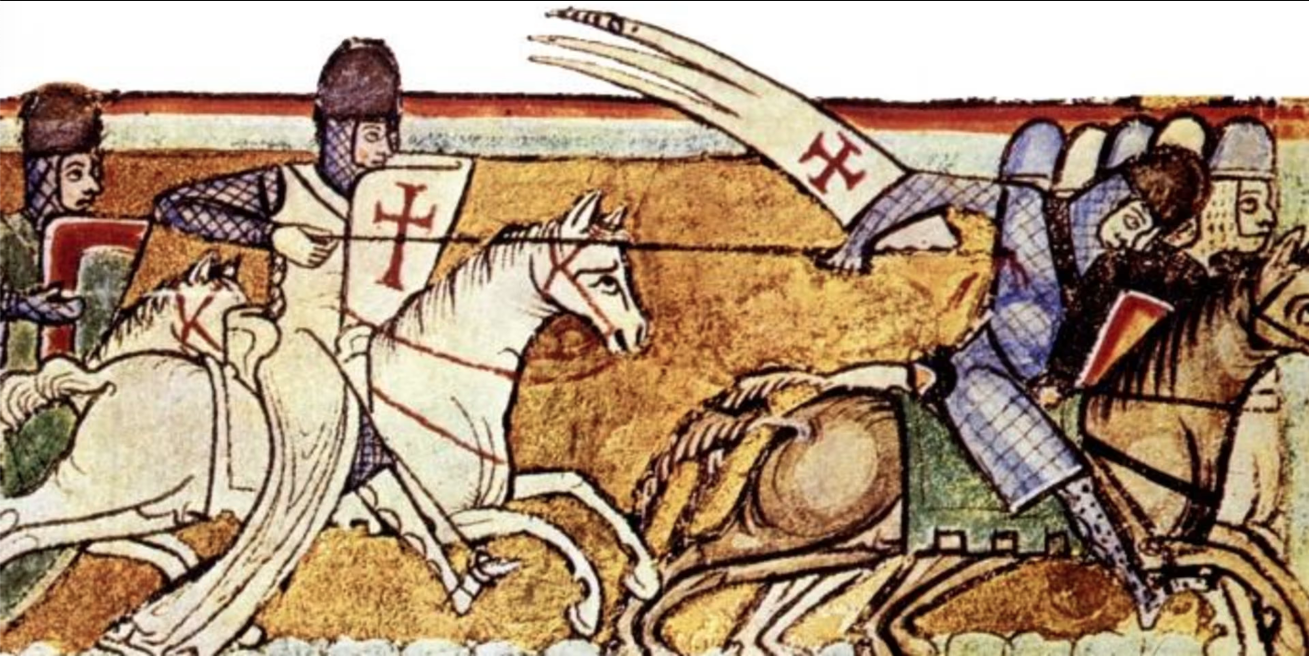
Knights Templar Crusading through the territory of the 52-card playing deck of Mamluk Egypt…
1418-1447: History of Tarot – Created for Gaming
About a century after playing cards arrived in Europe from the Islamic world (Mamluk Egypt), Italian nobility began commissioning new decks, adding additional courts and a new ‘trump’ suit for trick-taking games like tarocchi.
- 1418-1425: Marziano deck – Earliest known precursor to today’s tarot, commissioned by Duke Filippo Maria Visconti. 60 cards total with experimental structure: four bird suits (Eagle, Phoenix, Turtledove, Dove) and 16 Roman god trumps. No surviving cards.
- 1441-1447: Invention of the tarot deck and its earliest surviving examples – Specifically, luxury packs commissioned by northern Italian nobility (Visconti, Sforza, d’Este families) for the game of tarocchi. Hand-painted with gold leaf and family heraldic crests, trump cards reflected Catholic virtues, church figures and cosmic themes. Symbolism and card counts varied extensively between early decks.
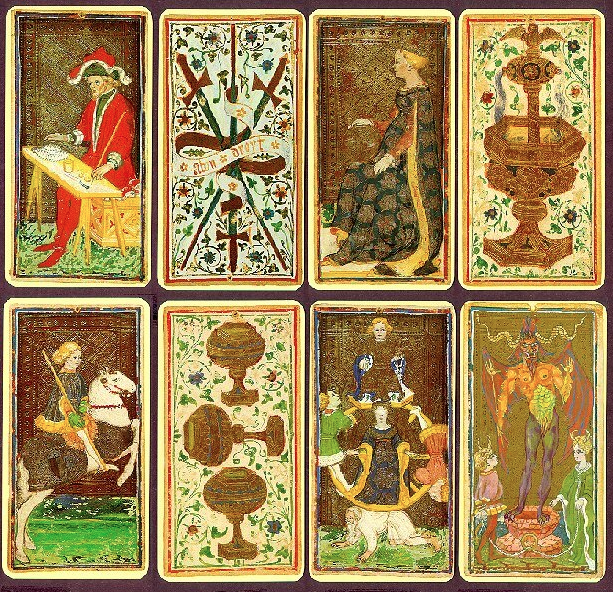
Original cards from the Visconti Sforza (Pierpont Morgan) tarot deck
c. 1480: The Birth of the Modern Playing Card Deck (France)
Modern card suits (hearts, diamonds, clubs, spades) emerge as simplified designs for mass production. This innovation spreads rapidly, replacing varied regional symbols and becoming the global standard. Interestingly, this three-color scheme introduced hidden alchemical principles. Red and black suit signs on white backgrounds encoded the spiritual journey we all undertake – incarnation (red), death (black), and transcendent potential (white) – were now present on every card of this widespread oracle.
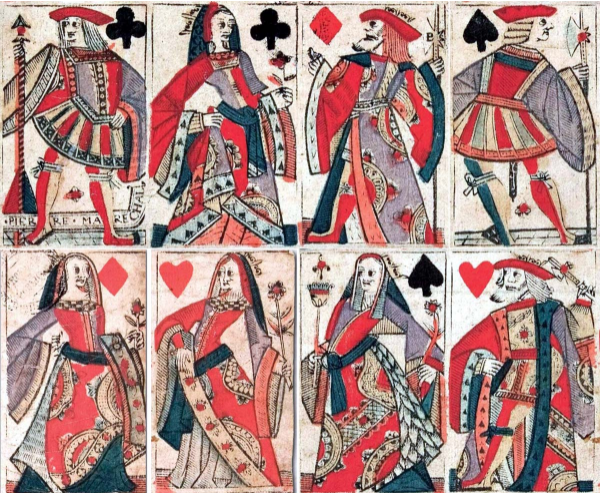
A “Rouen Pattern” deck, 1567, featuring the new standardized suit signs
1540-1750: Playing Cards in Divination
Published manuals document formalized divination systems using playing cards, while tarot references during this period remain solely for games.
- 1540: Francesco Marcolino publishes first known divination manual for cards (approx. 208 pages) using standard playing cards (Le Sorti, now at Metropolitan Museum)
- 1557: Catelin Geofroy produces the first known tarot deck with numbered trumps (Lyon, France). This sorting method notably marks an early step toward the Tarot de Marseille pattern, showing tarot’s spread from Italian nobles to French commercial production
- Late 1500’s: French card makers begin giving names and personalities to their court cards – an extremely useful idea in card reading
- c. 1650: Tarot of Marseilles standardizes the 78-card structure still used today, but documented uses remain solely for games
- c. 1690: The first cards specifically designed for fortune-telling appear in London (the “Lenthall Deck”.) This was a standard playing card deck printed with occult symbolism and instruction for interpretation
- c. 1750: Giacomo Casanova’s memoirs reference playing card divination in Europe, reflecting widespread informal cartomancy practices with standard 52-card deck
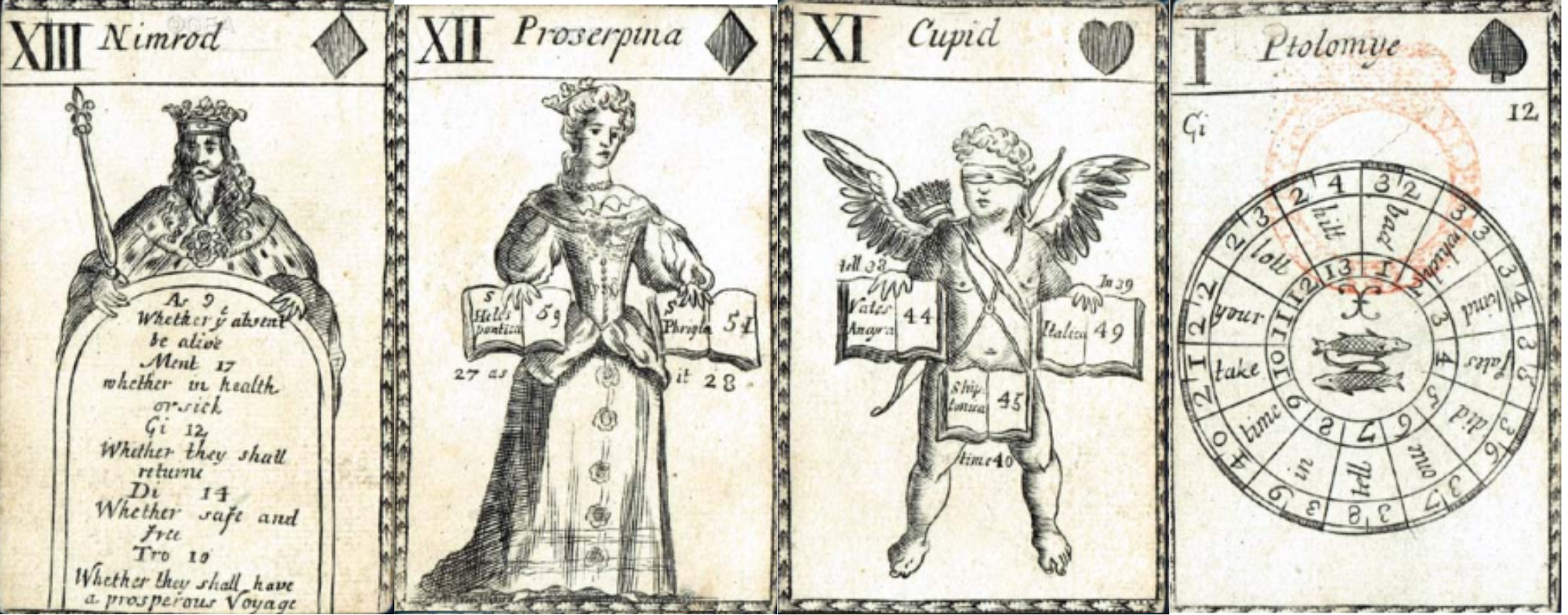
A King, Queen, Cupid and Ace from the John Lenthall deck, 1690.
1781-1909: The Occult Revolution
This era transforms the history of tarot and playing cards as divination tools. Tarot gains recognition and development in occult circles. Meanwhile, playing card divination continues in folk traditions and undergoes formalized esoteric study.
- c. 1750 – 1770: Earliest possible evidence of Tarot for divination, with an anonymous single page document assigning rudimentary meanings to 35 cards of the Tarocco Bolognese (a 62-card tarot deck)
- 1781:Antoine Court de Gébelin publishes Le Monde Primitif, claiming tarot originated from the ancient Egyptian Book of Thoth. He admits no historical evidence for this claim - yet it became the foundation of modern tarot mythology, repeated by occult authors as the definitive tarot history for over two centuries.
- 1783 – 1785: First tarot divination manual published (by Etteilla in France, following Gébelin’s claims.) This marks the beginning of tarot’s transformation from gaming to occultism.
- 1790 – 1830 (memoirs published 1843): Marie Anne Lenormand’s memoirs claim she read for Napoleon and French elites using playing cards, showing status of playing card divination
- 1846: Petit Lenormand 36-card deck published posthumously, based on Lenormand’s playing card divination methods. It remains a staple in European divination.
- 1854 -1860s: Éliphas Lévi links the 22 tarot trumps to Hebrew letters and Qabalah, creating the foundation for modern occult tarot systems
- 1888: The Hermetic Order of the Golden Dawn (London, England) integrates tarot into their magical system (with Kabbalah, astrology, and elemental correspondences). This formalized tarot as a core esoteric tool
- 1888: Order of the Magi (Chicago, IL) formalizes playing card mysticism, linking the deck to astrology, numerology, and ancient “Atlantean” symbolism. Led by Olney Richmond, the work of the Order notably ran parallel to tarot occultism, establishing playing cards as a spiritual science.
- 1889: Papus (Gérard Encausse) publishes Le Tarot des Bohémiens, systematizing tarot divination methods and spreading Gébelin’s Egyptian origin claims alongside Lévi’s Qabalah correspondences. The book becomes foundational for modern occult tarot practice.
- 1893: Olney Richmond’s publication, The Mystic Test Book, establishes foundation for the coming Cardology movement
- 1909: Rider-Waite deck introduces detailed symbolic imagery, shaping modern tarot’s visual style
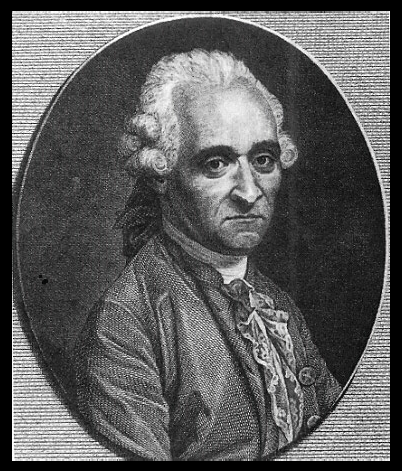
Antoine Court de Gébelin, a protestant pastor from France, changed the fate of tarot with his 1781 publication, Le Monde Primitif
1944-Present: Modern History of Tarot and Playing Cards
Both decks developed as divination tools through the 20th century, each achieving mainstream popularity through different channels.*
Key Dates:
- 1944: Crowley/Harris complete Thoth Tarot (deck released in 1969) reimagining Golden Dawn’s tarot-Qabalah system through Crowley’s Thelemic philosophy and Harris’s striking Art Deco imagery
- c. 1970 – 1971: First mass-printed tarot in US (Rider-Waite by U.S. Games Systems)
- 1970s – 1990s: Cardology movement gains mainstream popularity through Robert Camp’s Cards of Your Destiny and Love Cards, building on earlier work by the Order of the Magi (1888) and Olney Richmond (1893)
- 2002: Playing Card Oracles (Cortez/Freeman) connects playing cards to lunar cycles and geomancy, while bringing in-depth elemental and numerological applications
- 2023: Doors of Somlipith (Cortez/Freeman) refines decan correspondences, expands astrological applications, connects the Law of Three and geomantic rulers for Courts – positioned as an evolution/correction of prior systems.* Throughout this period, playing card divination also continued in Romani, Hoodoo/Conjure, and European folk traditions - often transmitted orally rather than through published books.
Pamela Coleman Smith, the illustrator of the Rider-Waite Tarot, also referred to as the Smith-Waite Tarot. Collection of S.R. Kaplan. Further reproduction prohibited.
* Throughout this period, playing card divination also continued in Romani, Hoodoo/Conjure, and European folk traditions - often transmitted orally rather than through published books.
FAQs for History of Tarot and Playing Cards
1. Did playing cards or tarot come first?
In fact, playing cards came first - though we don’t know exactly just how old.
The oldest surviving examples are from 12th-13th century Mamluk Egypt, but whether the Egyptians invented the 52-card system or inherited it from something even older remains unknown. Tarot was created at least 250 years later in Italy as a gaming modification of the original deck.
2. When was tarot invented?
Tarot was invented between 1425 and 1442 in northern Italy. Wealthy noble families (Visconti, Sforza, d’Este) commissioned hand-painted decks featuring Catholic imagery and family crests for a trick-taking game called “Tarocchi.” Additionally, for the first 300+ years of its existence, tarot remained exclusively a gaming deck - not a divination tool.
3. Is it true the Knights Templar brought tarot from Egypt?
No. The Knights Templar were officially dissolved in 1312. That was 129 years before tarot was invented. This is one of the most persistent myths in occult history. In fact, if the Templars encountered any cards during the Crusades, it would have been the 52-card playing deck circulating in Mamluk Egypt, not tarot.
4. Who was Antoine Court de Gébelin?
Antoine Court de Gébelin was a French occultist who, in 1781, published a false claim that tarot originated from the ancient Egyptian Book of Thoth. Although he admitted he had no historical evidence for this claim, it became the foundation of modern occult tarot mythology for over two centuries. His fabrication has shaped how tarot is viewed even today.
5. How old are playing cards?
We don’t know for certain. However, the oldest surviving examples are from 12th-13th century Mamluk Egypt. So we know they’re at least that old. But whether the Mamluks invented the 52-card system or inherited it from an even earlier culture remains a mystery. Certainly, the deck’s structure mirrors a calendar system: 52 cards = 52 weeks, 13 cards per suit = 13 lunar months, 4 suits = 4 seasons. This precision suggests an astronomical system that may be far more ancient than we can prove.
6. Why does this history matter for card readers?
Understanding the history of tarot and playing cards changes everything about how you work with cards. The 52-card deck isn’t a “simplified tarot” – conversely, it’s the original system that preserved the ancient codes of prophecy made for card reading. Tarot modified this structure and broke the precise astronomical correspondences for a game. Knowing the original intention behind your deck and who created it helps you unlock its mysteries.
Want to go deeper?
Now that you know the history of tarot and playing cards, you may naturally want to go deeper. The 52-card deck contains codes for prophecy most card readers have never explored – codes tarot lost when it was modified for games. Here are some resources:
The Playing Card Oracles– Learn the foundational system The Doors of Somlipith – Advanced astrological applications Order of the Black Ace – Join the mystical order for ongoing study
For podcast interviews: ana@anacortez.com