A recent visit to the New Mexico Museum of Indian Arts and Culture produced a surprising experience with playing cards that i suspect will linger in my heart for a long time to come. To think that playing cards and Indian artifacts could come together in any sort of meaningful way whatsoever is rather a stretch to begin with. I had been to this museum before, but this trip was different. The museum was coming alive for me. I saw things I had not noticed before that touched me deeply. And as before, I was moved greatly upon arrival by sweet flute music and a quote from an indian elder:
“I am here. I am here now. I have been here always.”
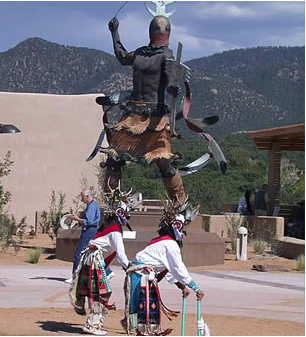
New Mexico Museum of Indian Arts and Culture
But here’s where the ancient world of the natives collided with my world of card reading using playing cards. Just before leaving, feet dragging after visiting room upon room of artifacts, I noticed something I had somehow missed previously: a gigantic photograph of an Indian in native garb playing a flute, and at his feet three playing cards.
What? I thought. Why would there be playing cards in the photo?
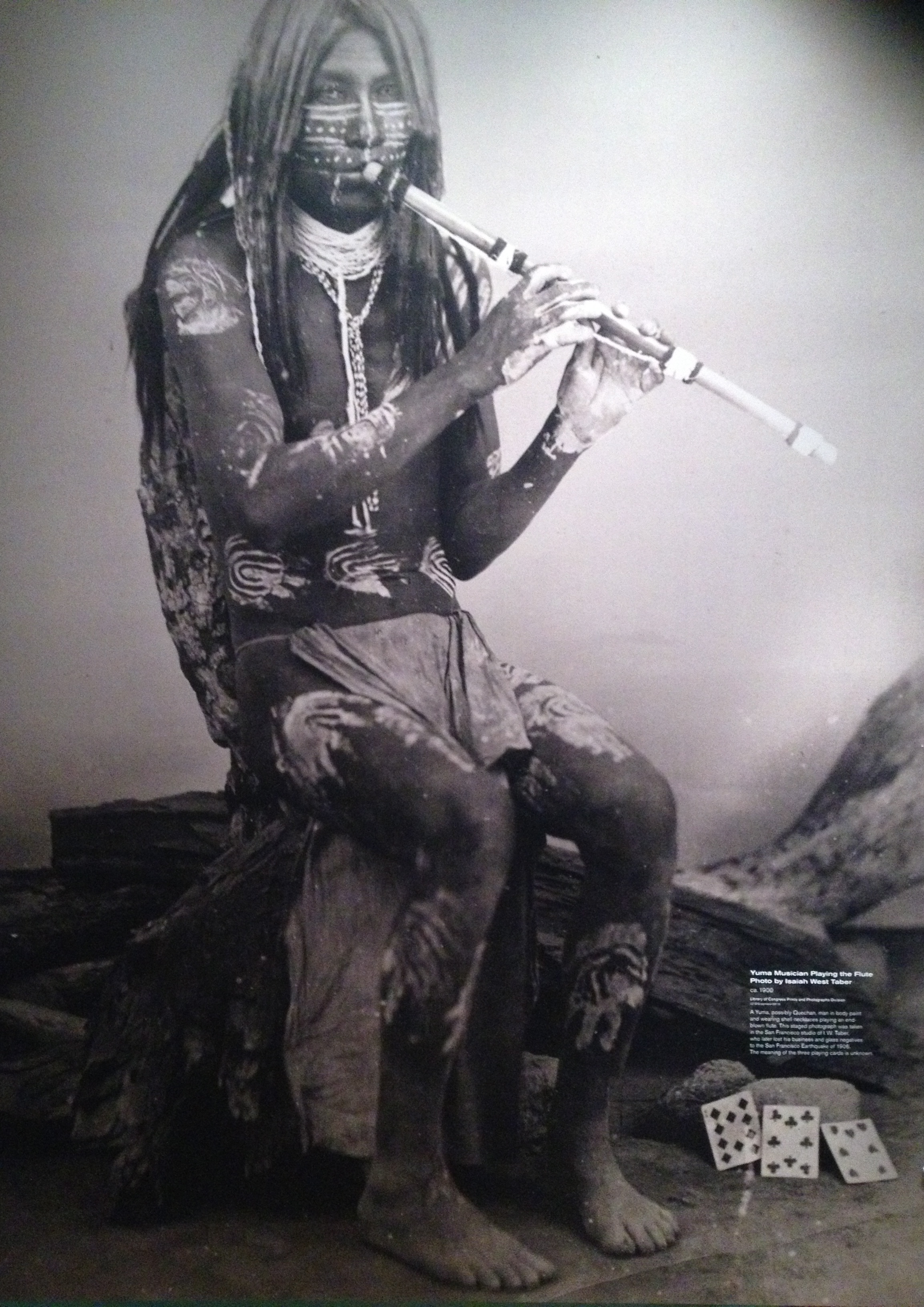
Native American Indian with playing cards
Upon reading the caption, I found the cards would remain a mystery, as the photo was found in San Francisco after the Great Fire, and little was known about it. Well, I took a picture of the photo (with permission), and left the museum thinking not much more of it, except what a mystery it was. Then entered more serendipity. On the way home, one of the friends I was visiting the museum with began to tell me how she was just then remembering that her grandmother read with playing cards. I asked her if she had taught her anything of her craft, and my friend said, “Yes.” Her Grandmother had taught her, “The first card is ‘what you get,’ the second card is ‘what you can’t have,’ and the third is ‘what you can’t get out of!” Well, we had a good laugh about how funny folklore can be and then, unexpectedly, pieces of a bigger puzzle started coming together: There were three cards in the photo. So, looking at the photo taken of the cards, my friend asked me to interpret them. And so I did, combining the meanings from my own system with her own Grandmother’s counsel: the first card representing what you get, the second what you can’t have, and the third what you can’t get out of. And my friend and I sat in silence for a while. Then she began to speak, saying that the interpretation really spoke to her, and then she began to cry. The message was very personal, in fact, a precious gift from an unlikely trio: her own grandmother, an unknown indian flute player, and a modern day reader of playing cards.
If you want to know what the interpretation was, get my book, The Playing Card Oracles,* and look up the three cards 🙂
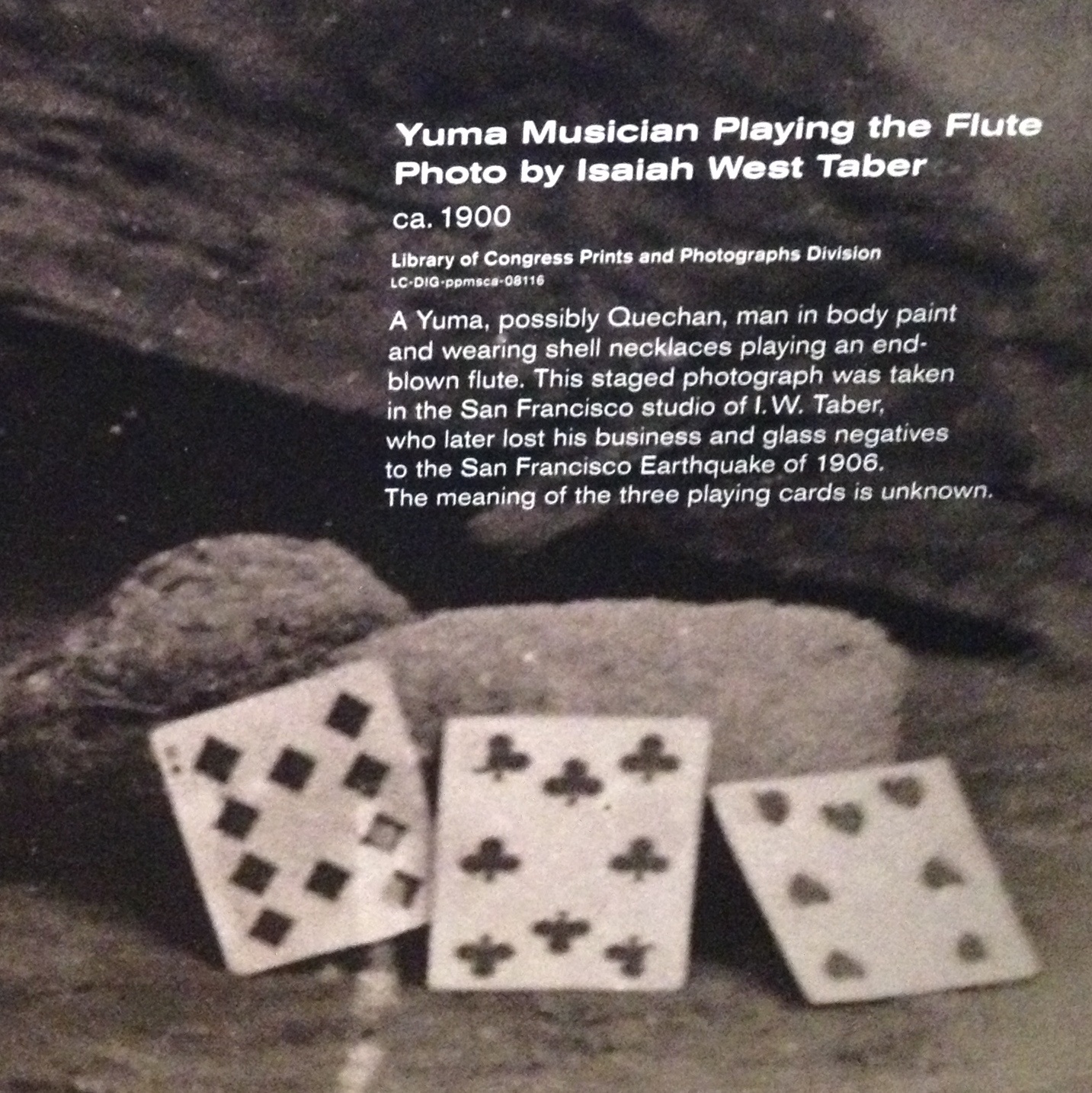
close up of playing cards at Museum of Indian Arts and Culture
*The Playing Card Oracles eBook is available now for a limited time at no cost ($19.95 retail.)CLICK HERE.
Post Script: Playing cards possess something exceptional that other decks do not: They have touched nearly every single culture on the planet. If there is a universal planetary language, it is playing cards. This gives them extraordinary power to communicate. And the language encoded there in symbols is something that people have been drawn to for centuries. Is it because the natural calendar is encoded there? Is there something that the “soul” recognizes in playing cards, even if it remains hidden from the “conscious” mind? All these are questions to be pondered and explored…